




Double-eyelid surgery in Korea involves more than choosing a high or low crease. The surgeon needs to assess eyelid skin, eyelid fat, the muscles that open the eyes, socket depth, the inner and outer corners and balance with the whole face. Some apparently uneven creases may also involve weakness of the eyelid-opening muscle or scar tissue from previous surgery.
Incisional double eyelid surgery: incision and main steps
The incision follows the crease planned by the surgeon. These hospital illustrations explain the procedure; they are not photographs taken during surgery.

The surgeon plans the crease shape and height for the individual eyelid.
The surgeon opens the planned incision and assesses excess tissue according to the surgical plan.
The crease is secured and the incision closed as appropriate for the tissue.
Swelling and the crease change during recovery. Results vary between individuals.
Photos courtesy of Made Young Plastic Surgery.
Care after surgery
- Follow the prescribed wound-care, medication and ointment instructions.
- Use cold compresses as instructed; avoid pressing or rubbing the wound.
- Protect your eyes from sunlight and wear sunglasses during recovery.
- Confirm stitch removal, follow-up and return to activities with your surgical team.
Care reference: American Society of Plastic Surgeons. Follow your operating surgeon’s individual instructions.
What may change after eyelid surgery? Identify the concern first
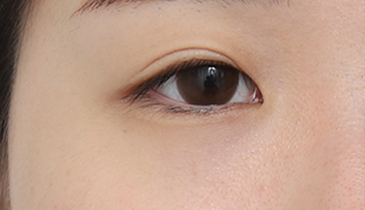
Before
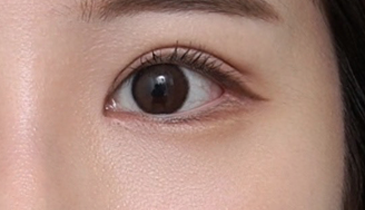
5 weeks after
VIEW’s photographs before surgery and at 5 weeks show the eyelid crease and upper-lid skin. The postoperative photograph is a follow-up image. Camera angles and lighting differ, and individual outcomes vary.
© VIEW Plastic Surgery
“Droopy eyes” can describe different problems. Photographs explain a concern; an examination determines which structures need attention.
- An indistinct crease: Crease surgery changes the eyelid fold. It does not automatically correct a low brow or impaired eyelid elevation.
- Excess upper-lid skin: Upper blepharoplasty may reduce skin covering the crease. Brow position also needs assessment.
- A low upper-lid margin / ptosis: The doctor assesses eyelid elevation and its causes. A higher crease alone is not a substitute for this assessment.
Changes may involve crease definition, overlying skin or eyelid position, depending on the procedure. Surgery does not enlarge the eyeball or reshape the nose or jaw. A low brow may require separate brow-lift assessment.
Early swelling or bruising can make creases look high or uneven. Final healing may take months; outcomes and follow-up plans vary.
Ask: Is my concern the crease, skin, brow or eyelid elevation? What will the proposed procedure change, and what will remain?
Read about brow and forehead lifting
Further reading: ASPS — Eyelid surgery · ASPS — Results · AAO EyeWiki — Blepharoptosis
Santongsuai editorial team · Section added 12 October 2026
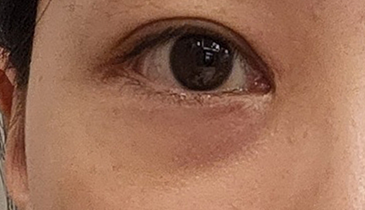
Before
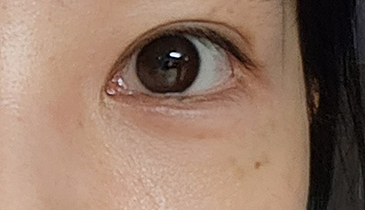
3 months after
VIEW’s photographs before surgery and at 3 months illustrate the under-eye bags and the transition to the cheek. Camera angles and lighting differ, so these photographs should not be used to compare skin colour. Individual outcomes vary.
© VIEW Plastic Surgery
Under-eye bags, hollows or loose skin: what may change?
An under-eye concern may have several causes. Agree on the target before choosing a procedure.
- Bags: Assess protruding fat and lid support; removing and repositioning fat have different purposes.
- Hollows: Repositioning uses existing orbital fat. Fat grafting brings fat from another body area; they are different procedures.
- Loose skin: Fat treatment alone may leave excess skin. Skin and lower-lid support need assessment.
- Dark circles: Contour shadows differ from pigmentation or thin skin. Surgery cannot promise to remove every cause of darkness.
Depending on the plan, bag prominence, the lid–cheek transition or excess skin may change. The eyeball does not become larger, and a whole-cheek lift is not automatic.
An internal eyelid incision and an incision below the lashes are different access routes. Fat repositioning may form part of lower blepharoplasty; ask which tissues the plan addresses.
Disclose dry eyes, earlier surgery, under-eye filler and medicines. Risks include bruising, bleeding, infection, dry eyes, lower-lid retraction or outward turning, asymmetry and possible revision.
Ask: What causes my concern? Is fat moved or grafted? Is skin treated? What may remain, and when is follow-up?
ASOPRS — Lower eyelid bags and blepharoplasty · ASPS — Risks and safety
Santongsuai editorial team · Added 12 October 2026
Common double-eyelid surgery methods
The non-incisional method may suit some people with thinner eyelids who want minimal scarring. Short or full incisions may be more appropriate when more skin, fat or scar tissue needs to be addressed. If the eyes appear droopy or the eyelid-opening muscle is weak, the doctor may consider correcting that muscle as well.
Why consider more than crease height?
A crease that suits one face may not suit another because eye shape, sockets, brows and facial structure differ. A crease that is too high in someone with deep sockets or thin eyelid skin may look unnatural. A crease that is too low when there is substantial drooping skin may not give the desired definition.
Questions to ask when preparing eye photographs
- Should I choose a non-incisional, short-incision or full-incision method?
- Does the eyelid-opening muscle need correction?
- Should the inner corners, outer corners or downward position of the outer corners also be adjusted?
- In a revision case, how will existing scar tissue be managed?
- How long should scarring and swelling take to settle?
What needs attention in revision eyelid surgery?
Revision surgery requires assessment of the previous crease, scars, scar tissue, muscles and the patient’s expectations. The outside may show little difference, but surgery can reveal scar tissue or attachment points that make correction more difficult. A detailed assessment by a specialist is therefore important.
How should photographs be prepared for assessment?
Take front-facing photographs with the eyes naturally open, closed and looking upward, plus side views, in natural light without filters. Include previous eyelid surgery, injections or other treatments around the eyes and reference photographs of your preferred appearance. This helps the team organize questions before sending them to the hospital.
If you are unsure whether eyelid surgery alone is appropriate or whether brow lifting, a facelift or eyelid fat grafting should also be assessed, start with the consultation booking page and compare options in the English hospital network.
Related Santongsuai data
Doctor Directory · Case Database · Hospital Network · Hospital Verification · Price Index 2026 · Evidence Hub
Frequently asked questions about double-eyelid surgery in Korea
Are non-incisional results permanent?
Durability depends on the technique, tissues and individual habits. An incisional method may suit some cases better for a more defined crease and better tissue management.
Do droopy eyes always require muscle correction?
A doctor needs to assess this. If the eyelid-opening muscle is weak, creating a crease alone may not address the main problem.
Can I use a model’s photograph as a reference?
Yes, as guidance, but the doctor must adapt the plan to each patient’s eye anatomy and safety.
Check evidence and quotation before booking
For a first operation or revision, request a written quotation identifying the procedure scope, treating doctor, materials, anaesthesia, tests, taxes, medication and follow-up, plus any separate interpreter, transport or accommodation costs. Confirm the payment recipient, deposit amount, rescheduling, cancellation and refund terms before paying. Online budget figures are not a confirmed personal quotation.
Compare cases by procedure and time after treatment. A hospital gallery is not proof that Santongsuai coordinated that case or that the same surgeon will operate on you. Our shared evidence directories below are mainly Thai/English; ask the team to explain any untranslated details.
Doctor directory — TH/EN · Case records and sources — TH/EN · Hospital verification — TH/EN
Prices and quotation checks · Request a consultation
A request is not a confirmed appointment or treatment plan. Medical suitability is decided by the treating clinician.