Start by identifying the concern
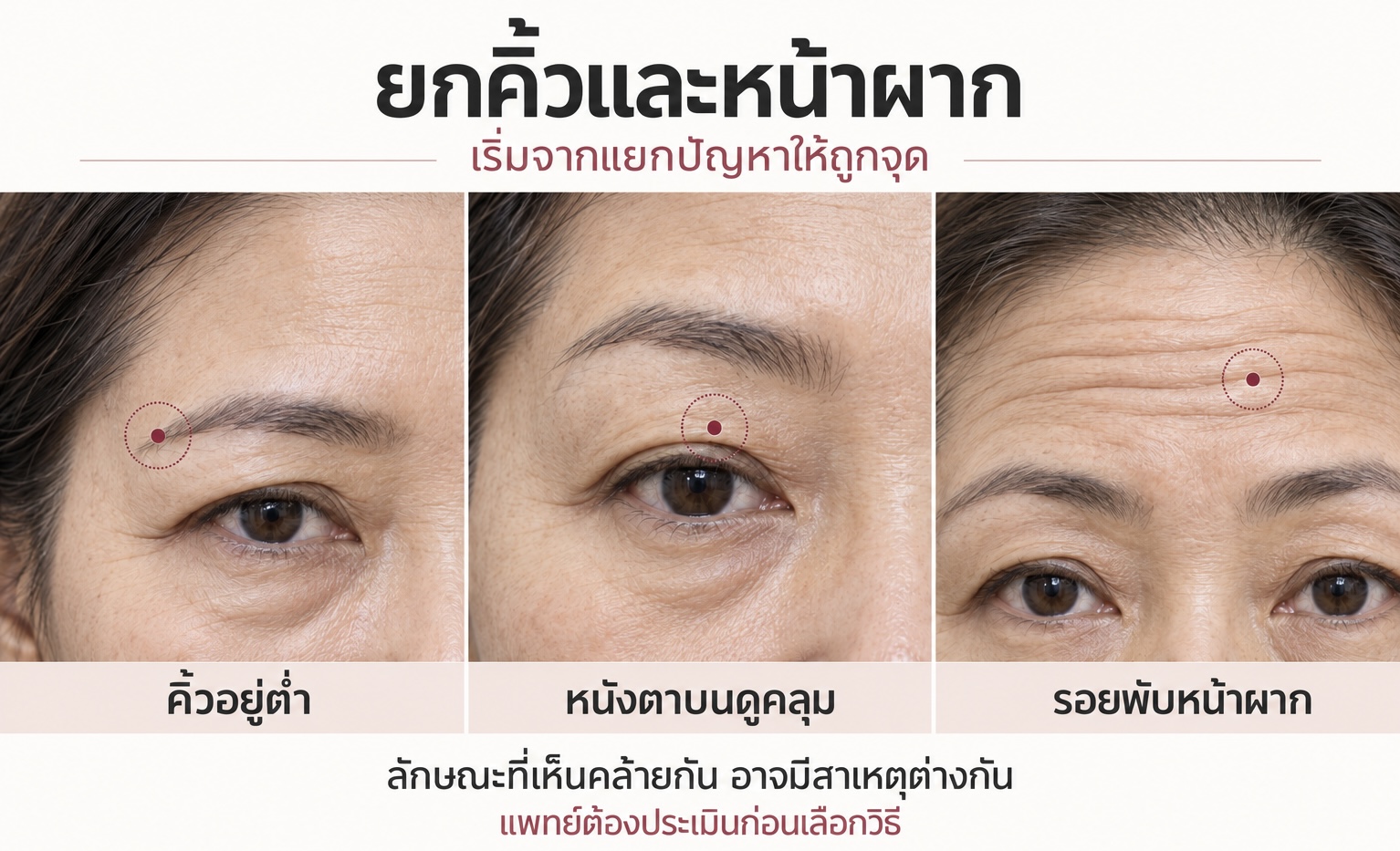
Similar appearances can have different causes. A doctor should assess the brow, eyelid skin and eyelid function before recommending a procedure.
AI-created educational illustrations by Santongsuai. Not real patients or before-and-after surgical results.
Real forehead-lift case photographs
Photographs from Made Young Plastic Surgery illustrate the brow, forehead and eye area. The source does not identify the fixation device or technique, so these photographs do not establish that Endotine was used. Lighting, angles and expression differ; individual results vary.
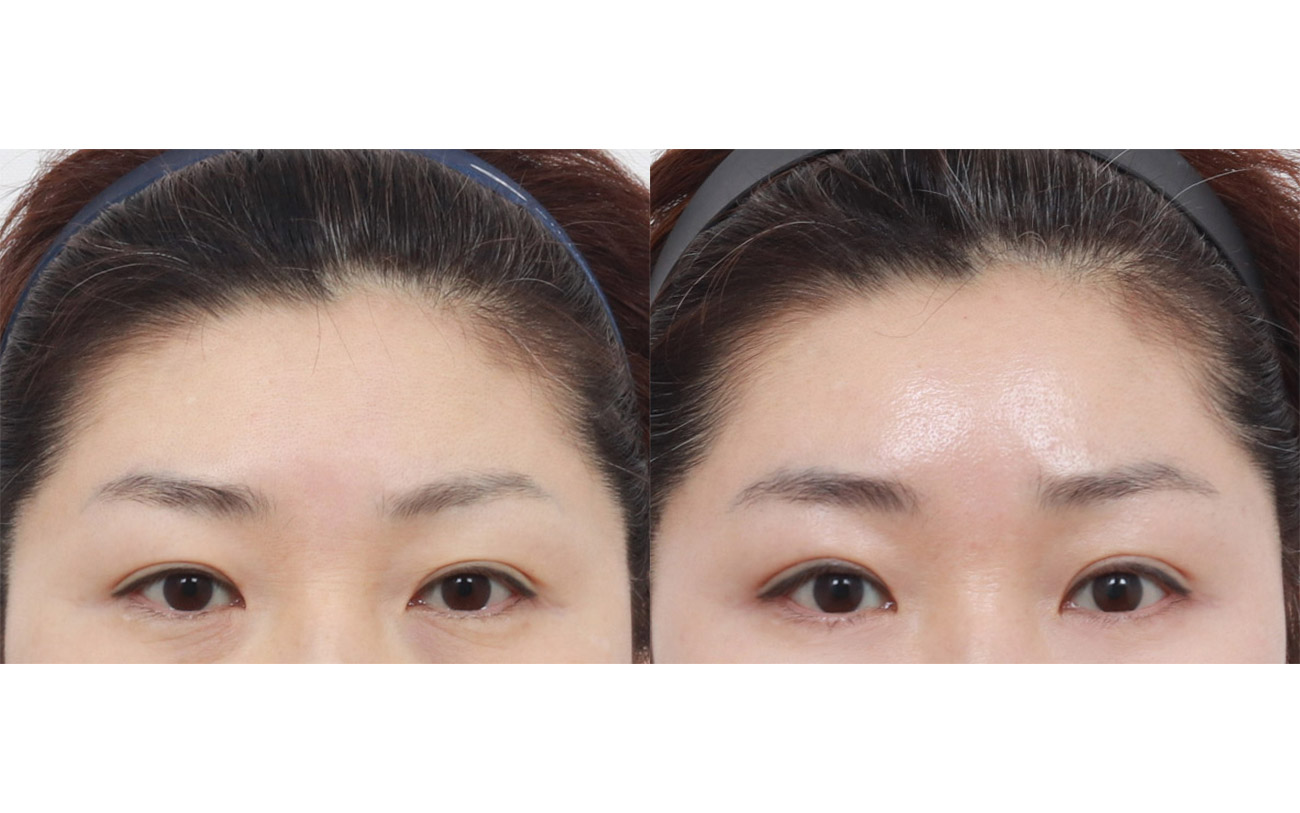
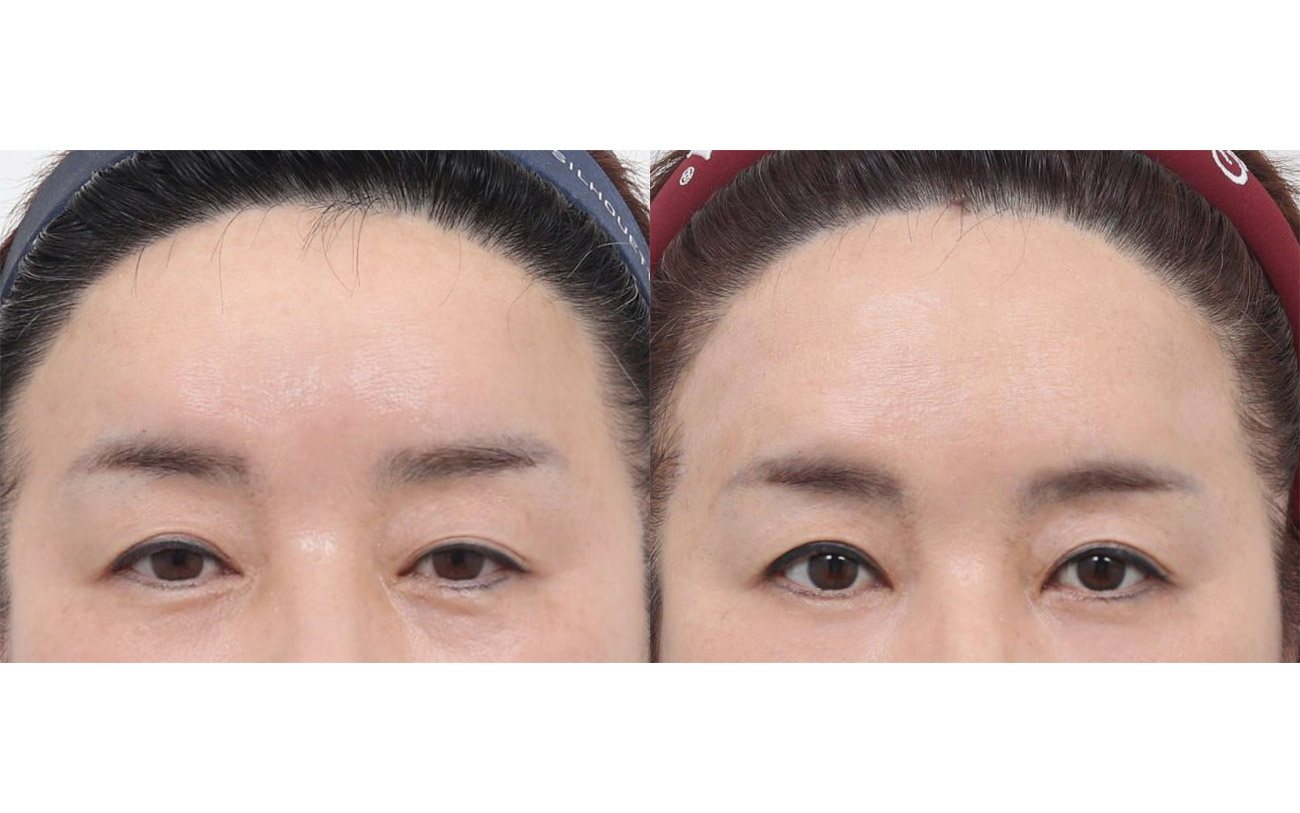
Which facial areas may change after a brow and forehead lift?
- Brow position: Low brows may be repositioned, including the outer brow. The appropriate height and shape depend on anatomy; higher is not always better.
- Upper eyelid area: Hooding may lessen when brow descent contributes to it. Excess eyelid skin or eyelid muscle dysfunction needs a separate assessment.
- Forehead and frown lines: Some lines may soften depending on the technique. Deep creases and expression lines can remain.
- Upper-face appearance: The brow and area above the eyes may look more open. This does not mean the eyeballs, nose, lips or jawline become different.
A brow lift does not directly treat sagging cheeks, jawline or neck. Endotine assists tissue fixation; it does not reshape every facial area on its own.
Early swelling and bruising do not represent the final appearance. Results develop over the following months. Ask when brow position, symmetry and incisions should be reviewed.
What is Endotine?
Endotine is a family of absorbable tissue-fixation implants. An implant is one part of a surgical plan, not a synonym for every facelift. Ask which model is proposed.
How is it used?
During a forehead or brow lift, the surgeon releases and repositions tissue and selects a fixation method. Endoscopic approaches use small scalp incisions and a camera. This overview is not a surgical instruction.
Endotine or bone tunneling?
Endotine uses an implant to support fixation. Bone tunneling secures tissue using sutures passed through bone channels. The right choice depends on anatomy and the treating surgeon’s assessment, not brand popularity.
Brow lift, eyelid surgery or facelift?
These procedures address different areas. A low brow, loose eyelid skin and eyelid-muscle dysfunction require separate assessment. A forehead lift is not a substitute for lower-face or neck surgery.
Risks and recovery
Possible risks include bleeding, infection, asymmetry, numbness and scarring. Fixation implants can be palpable or uncomfortable. Ask about model-specific risks, follow-up and when travel is appropriate.
Does it last 5–10 years?
Do not treat a universal time range as a personal guarantee. Implant absorption and the duration of the cosmetic result are different questions. Ask for evidence relevant to the exact procedure, follow-up period and patient group.
Questions before choosing
Which procedure and implant model? Why this fixation method? What alternatives? Which surgeon? What is included in the written quotation? What happens if problems occur? Which visits must be completed before travel?
Sources
Prepared by Santongsuai for general education. The treating surgeon determines suitability and care. Updated 11 October 2026.
Forehead lift: follow-up photos and recovery care
These photos come from the hospital’s endoscopic forehead-lift materials. They show the forehead and hairline at different stages, not the full incision or the fixation device used.

Photos courtesy of Made Young Plastic Surgery. The captions show the recovery stages reported by the hospital. Lighting, camera angles and hair styling may differ. Individual results vary.
Where are the incisions?
An endoscopic forehead lift usually uses small scalp incisions behind the hairline. The number and positions depend on the surgical plan. Hairline and coronal approaches differ; ask your surgeon to show the planned locations.
Care after surgery
- Keep your head elevated and avoid strenuous activity as instructed.
- Do not apply ice or heat directly to the operated area on your own.
- Avoid rubbing, pressing or pulling wounds; follow dressing and drain instructions.
- Take prescribed medication and confirm hair-washing, stitch or clip removal and follow-up dates.
Care reference: American Society of Plastic Surgeons. Follow your operating surgeon’s individual instructions.
Plan your consultation
Tell the Santongsuai team which area concerns you. We can help prepare questions and coordinate a consultation with a treating surgeon.